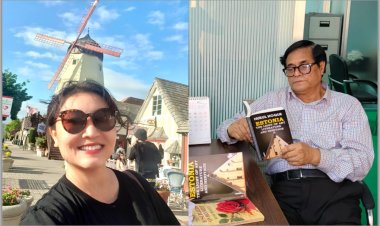


Nurul Hoque - Poetic Analysis (Prepared for publication by Angela Kosta)
 Moderator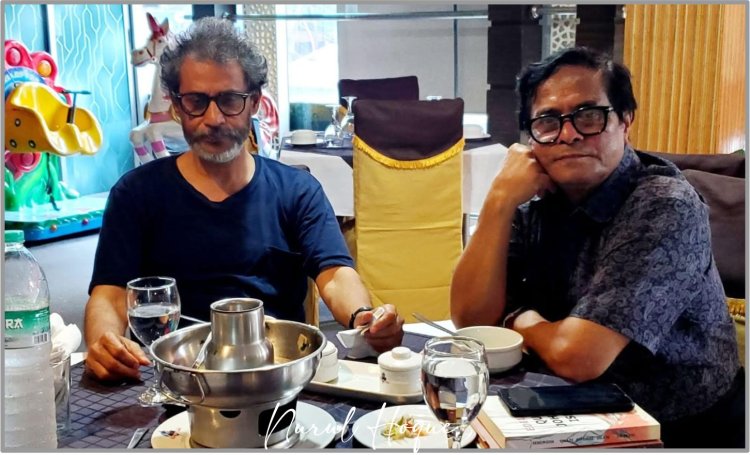
An Analytical Exploration of Poet Quazi Johirul Islam and His Collections of Poetry "Be a Tree": A Philosophical, Internationalism and Multifacetedness Poetic Journey
By Nurul Hoque
Part I.
Poet Quazi Johirul Islam and the Silent Harvest of Verse.
An Analysis of poet
The true stature of Quazi Johirul Islam as a poet will ultimately be measured by the hand of eternity. Yet, from my earnest engagement with his work, I can say without the slightest reservation that to exclude his name from the grand avenue of literature, or to attempt erasure of his voice from its annals, would be nothing short of literary audacity.
This poet of measured speech has, in the fewest of words, illuminated the grandeur and subtle beauty of life. In his poems, the human condition breathes naturally—each line a distillation of emotion and reflection, evoking a quiet, contemplative awe. Only a poet of rare strength and profound sensitivity could encapsulate such vast meaning within such a delicate economy of language. This is no easy feat; it is the hallmark of a true craftsman of the soul.
As the principal translator of Be A Tree, I immersed myself in his poetry with devout attention and contemplative silence. The essence I drew from his verses was not merely literary—it was deeply aesthetic, even spiritual. The poetic flavor was one I can only describe as incomparable. With that deep appreciation guiding me, I translated each poem with a sacred sense of duty and literary fidelity, trying to preserve not just the meaning, but the inner music and resonance of the original.
Poetry, to me—and clearly to Quazi Johirul Islam—is not mere ornamentation of words, but rather the silent pastureland of a poet’s invisible universe. It is where the poet, untethered by logic and free from mundane, wanders through the fertile fields of imagination and introspection. From there, he harvests the fruits of thought and emotion and arranges them verse. In his work, one finds the alchemy of life’s aesthetics and the marvel of human imagination—forces that fertilize the poetic mind and beckon it towards creative awakening.
That inwardness, the turning of the self toward itself—is not isolation, but invocation. It is this profound internality that gives his poems their emotional and spiritual gravitas. The poet surrenders himself wholly to emotion, allowing it to baptize him in the incantatory waters of creation. In such surrender lies the poet’s path to self-construction. For Quazi Johirul Islam, as for all authentic poets, it is self-absorption—not narcissism, but soulful depth—that births true poetry. The more he roots himself in the rich soil of imaginative solitude, the more radiant his creations become. In the lamp-lit silence of contemplation, the poet searches not only for expression—but for immortality.
In today’s literary landscape, a great many equate modern poetry with the rhythms of prose. Some go so far as to believe that poetry clad in ultra-modern grab has moved away from its essential roots. While such opinions are not entirely unfounded, they fail to capture the full truth. Modern poetry, evolving with the current of time and the momentum of literary history, has undeniably shaped its own distinctive stream. But to say that it has deviated from the fundamental tenets of poetry is to misread its core. The emotional intensity, intellectual engagement, and visionary texture that define true poetry are not lost in modern forms; they are simply reframed. Every age gives rise to its own literary aesthetic, and modern poetry is no exception. It remains, in essence, a legitimate continuation of poetic legacy.
I share Poet Quazi Johirul Islam’s view on rhyme; a subject often debated in literary circles. Many modern poets’ distance themselves from end rhyme, dismissing it as archaic or overly musical. Yet often this dismissal stems from inability rather than conviction. Constructing rhyme with grace and precision requires great poetic skill—and many, lacking it, choose to reject rhyme altogether. But rhyme, when executed well, is not merely a musical device—it is the inner pulse of the poem.
Poetry is life—it is the distilled essence of existence. To conclude, I reaffirm my belief that poetry, or verse, is the rhythmic configuration of language, the inevitable patterning of feeling into form. It is the concentrated manifestation of a poet’s emotions, realizations, and intellect, conveyed through metaphor, simile, image, and suggestion. In Quazi Johirul Islam’s work, these elements do not merely exist—they flourish.
In Be A Tree, readers will encounter the silent cry of the earth, the whispered wisdom of nature, and the reflective depths of the human soul. And I, Nurul Hoque, as the devoted translator of this luminous collection, invite readers into this sacred garden of verse where every poem is both seed and tree, both silence and bloom.
Part II.
An Analytical Exploration of Quazi Johirul Islam’s "Be a Tree": A Philosophical and Poetic Journey
Poet Quazi Johirul Islam’s "Be a Tree" is a profound collection of poems that delves deeply into the human condition, nature, and the intricate interplay between the two. The book is a testament to the poet’s ability to weave philosophical musings with vivid imagery, creating a tapestry of thought-provoking verses. This analysis will explore the overarching themes, stylistic elements, and philosophical underpinnings of the collection, with a focus on selected poems to illustrate the depth and breadth of Islam’s work.
THEMES AND PHILOSOPHICAL UNDERCURRENTS
Human Existence and Immortality
The opening poem, "Human", sets the tone for the entire collection. It explores the grandeur of human existence, asserting the individual’s centrality in the universe. Lines like "I have hidden an entire Atlantic within a single drop of water" and "I imprisoned the sky within the mirror of a fingernail" reflect the poet’s belief in the vastness of human potential and the paradox of human insignificance and grandeur. The poem culminates in the declaration of the human as "the sovereign truth", radiant and expansive, a theme that resonates throughout the collection.
Nature as a Metaphor for Life
The titular poem, "Be a Tree", serves as a central metaphor for resilience, growth, and selflessness. The tree symbolizes endurance in the face of adversity, drawing strength from sorrow and envy to bear fruit and offer shade. The poet’s advice to "never fall in love with birds" underscores the transient nature of relationships and the importance of self-reliance. This poem encapsulates the collection’s recurring theme of finding strength and purpose in the natural world.
Social and Political Critique
Poems like "The Corrupt Flow" and "Festival of Falsehood" offer scathing critiques of contemporary society. Islam laments the moral decay, greed, and hypocrisy that plague humanity. In "The Corrupt Flow", he writes, "Thieves wear the victor’s crown with pride, while the noble in filth must bathe and hide." These verses highlight the poet’s disillusionment with societal structures and his call for a return to integrity and justice.
Mortality and Human Condition
"In Waiting for the Morning" is a poignant meditation on mortality, loss, and the fragility of life. The poem’s depiction of a man awaiting his wife’s death in a hospital corridor is heart-wrenching. The interplay of darkness and light, despair and hope, reflects the poet’s exploration of the human struggle to find meaning in the face of inevitable death.
MYTH AND HISTORY
"Never Learned to Stand Upright" draws on the myth of Lucy, the ancient hominid, to critique humanity’s failure to evolve morally and spiritually. The poem juxtaposes humanity’s physical evolution with its moral stagnation, symbolized by the "enormous burden of greed" that prevents humans from standing upright. This theme of historical and mythological reflection adds depth to the collection.
Poetry as a Universal Force
"I Will Take the Poem Along" elevates poetry to the status of a universal force that permeates every aspect of life. The poet envisions poetry as a means of connecting with the world, from the struggles of immigrants to the innocence of an autistic child. The lines "I will take the poem everywhere: to brothels, to battlefields, to kitchens, to cowsheds" underscore the transformative power of poetry.
Legacy and Barrenness
"Inheritance" explores themes of legacy and the fear of leaving nothing behind. The octogenarian woman’s lament, "I left behind nothing—no child, no wealth, not even the shadow of a single book", contrasts with the nurse’s reassurance that "the birth of a rose is never a failure." The poem suggests that legacy is not always tangible, and that the essence of life lies beyond material wealth.
Time and Reflection
"Old Mirror" delves into the passage of time and the search for meaning. The poet reflects on the "shattered reflection of the face" and the "broken images" that drift in the mirror. The poem captures the enduring quest for a "beloved harbor" amidst the tides of time.
Erasing the Past
"Everything Gets Erased" examines the inevitability of change and the erasure of the past. The poet juxtaposes the "brush of dreams" with the "eraser of science", highlighting the tension between progress and tradition. The poem suggests that even the scars of war and hatred can be tenderly uprooted and replaced with beauty.
Light and Darkness
"After Turning Off the Light" explores the interplay of light and darkness, both literal and metaphorical. The poet finds beauty in the "glow that begins to rise" after turning off the light, suggesting that true illumination often comes in moments of stillness and introspection.
Sexuality and Nature
"Pollination" uses the metaphor of pollination to explore themes of sexuality and reproduction. The "sexual anguish" of the female gourd-flower reflects the poet’s broader meditation on the natural world and its parallels to human experience.
Myth and Shame
"Barnacle" draws on the myth of Ahalya to explore themes of shame and judgment. The barnacles, described as "shameful thorn-flowers", symbolize the enduring scars of trauma and the complex interplay of guilt and redemption.
STYLISTIC ELEMENTS
Vivid Imagery
Poet Quazi Johirul Islam’s use of imagery is striking and evocative. In "The Eyes of the Book", he writes, "A yellow bird freely comes and goes in the tree hollow, the wind sways, such joy in the leaves." Such images create a sensory experience that immerses the reader in the poet’s world. The juxtaposition of natural beauty with human constructs, like the "complex China-India border", adds layers of meaning.
Symbolism
The tree, the bird, the apple, and the sky are recurring symbols that carry multiple meanings. In "The Parable of the Apple", the apple symbolizes temptation, sin, and the human quest for immortality. The tree in "Be a Tree" represents resilience and selflessness. These symbols enrich the poems, inviting readers to delve deeper into their meanings.
Contrast and Paradox
Quazi Johirul Islam frequently employs contrast and paradox to highlight the complexities of life. In "Human", he juxtaposes the vastness of the Atlantic with a single drop of water, and the sky with a fingernail’s mirror. In "Festival of Falsehood", the beauty of the "polished blue" sky contrasts with the "filthy city’s thick air with corpses of birds." These contrasts underscore the duality of existence.
Narrative and Lyricism
The collection blends narrative and lyrical elements. Poems like "In Waiting for the Morning" and "The Corrupt Flow" tell stories, while others, like "Human" and "Be a Tree", are more lyrical and reflective. This combination creates a dynamic reading experience.
MY EVALUATION
Quazi Johirul Islam’s "Be a Tree" is a masterful collection that explores the complexities of human existence, nature, and society. Through vivid imagery, rich symbolism, and philosophical depth, the poet invites readers to reflect on their place in the world and the moral and spiritual challenges they face. The collection is a testament to the power of poetry to illuminate the human condition and inspire introspection. Whether meditating on the grandeur of human existence, the resilience of nature, or the moral decay of society, Islam’s verses resonate with timeless relevance and profound insight.
Part III.
An Analytical Exploration of Quazi Johirul Islam’s "Be a Tree”: Internationalism and Multifacetedness in his Poetry
Quazi Johirul Islam’s poetry is not confined to the boundaries of a single culture or geography; it transcends borders, embracing a global perspective that reflects his deep engagement with universal themes. His work is marked by a profound sense of internationalism and multifacetedness, addressing issues that resonate across cultures, histories, and societies. This chapter explores how Islam’s poetry embodies these qualities, drawing on specific poems to illustrate his global outlook and diverse thematic concerns.
INTERNATIONALISM IN QUAZI JOHIRUL ISLAM’S POETRY
Global Issues and Human Suffering
Quazi Johirul Islam’s poetry often addresses global issues such as migration, war, and inequality. In "I Will Take the Poem Along", he writes about the plight of immigrants and refugees, placing his poems in the hands of "Syrian refugee children" and at the "Mexican border." These lines highlight his awareness of the global refugee crisis and his empathy for those displaced by conflict and poverty. The poem becomes a vehicle for connecting with human suffering on an international scale.
Example:
"When Syrian refugee children gather in groups / on the sidewalks of Manhattan, / hands outstretched for help, / instead of dropping dimes or quarters, / I will place a poem / in the trembling palm of a child."
Here, the poet transforms poetry into a universal language of compassion and solidarity.
CULTURAL AND RACIAL HARMONY
In the same poem, Quazi Johirul Islam celebrates the multicultural harmony of places like Jackson Heights, a neighborhood in New York City known for its diversity. He writes, "I’ll take it to Jackson Heights, / show it the harmony of mixed races." This reflects his appreciation for cultural pluralism and his belief in the possibility of coexistence in a globalized world.
Environmental Concerns
Mr. Islam’s internationalism also extends to environmental issues. In "I Will Take the Poem Along", he sneaks poems into "oil pipelines" to expose the human and ecological costs of greed. This act of poetic activism underscores his concern for global environmental degradation and the exploitation of natural resources.
Example:
"I’ll even sneak a few into oil pipelines, / to learn how many drops of blood / flow in exchange for each drop of oil / in the selfish tunnels of greed."
This metaphorical critique of the oil industry resonates with global environmental movements.
CROSS-CULTURAL MYTH AND HISTORY
In "Never Learned to Stand Upright", Islam draws on the myth of Lucy, the ancient hominid discovered in Ethiopia, to critique humanity’s moral stagnation. By referencing a figure central to human evolutionary history, he connects his poetry to a shared global heritage. Similarly, in "Barnacle", he invokes the myth of Ahalya from Hindu mythology, demonstrating his ability to weave cross-cultural narratives into his work.
MULTIFACETEDNESS IN ISLAM’S POETRY
Themes of Resilience and Selflessness
In "Be a Tree", Poet Quazi Johirul Islam uses the metaphor of a tree to explore themes of resilience, selflessness, and endurance. The poem’s universal message — "Stand tall, O tree, / and laugh aloud in the southern breeze"—resonates across cultures, offering a timeless lesson on how to navigate life’s challenges.
EXPLORATION OF MORTALITY AND LEGACY
"Inheritance" delves into the theme of legacy, as an octogenarian woman reflects on her life and the fear of leaving nothing behind. The nurse’s reassurance—"the birth of a rose is never a failure"—offers a universal perspective on the meaning of life and the value of intangible legacies.
Interplay of Light and Darkness
In "After Turning Off the Light", Islam explores the interplay of light and darkness, both literal and metaphorical. The poem’s meditative tone and imagery— sharp rays of light settle like watercolors on cotton paper—captures a universal experience of finding beauty in moments of stillness and introspection.
SHAME AND REDEMPTION
In "Barnacle", Islam draws on the myth of Ahalya to explore themes of shame and judgment. The barnacles, described as "shameful thorn-flowers", symbolize the enduring scars of trauma and the complex interplay of guilt and redemption. This exploration of human emotions and moral dilemmas is universally relatable.
SYNTHESIS OF INTERNATIONALISM AND MULTIFACETEDNESS
Poet Quazi Johirul Islam’s poetry is a testament to the power of art to transcend borders and connect people across cultures. His internationalism is evident in his engagement with global issues, his celebration of cultural diversity, and his use of cross-cultural myths and histories. At the same time, his multifacetedness allows him to explore a wide range of themes—from resilience and mortality to sexuality and redemption—that resonate with readers from all walks of life.
By weaving together, the personal and the universal, the local and the global, Islam creates a body of work that is both deeply rooted in his own cultural context and profoundly relevant to a global audience. His poetry serves as a bridge between cultures, inviting readers to see the world through a lens of empathy, curiosity, and shared humanity.
Quazi Johirul Islam’s poetry is a celebration of internationalism and multifacetedness, reflecting his belief in the interconnectedness of human experiences. Whether addressing global issues like migration and environmental degradation or exploring universal themes like resilience, mortality, and redemption, his work speaks to the heart of what it means to be human. Through his vivid imagery, rich symbolism, and philosophical depth, Islam invites readers to engage with the world in all its complexity and beauty, reminding us that poetry is not just a reflection of life but a force that can transform it.
Prepared for publication by Angela Kosta