

Tasneem Hossain, Give to Gain: Achieving Equality Together
 Moderator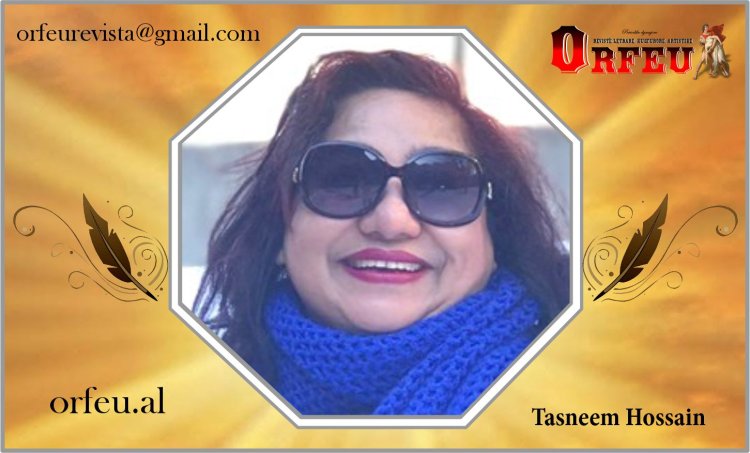
Give to Gain: Achieving Equality Together
“No woman or girl should fear for her life because of who she is,” said Ghada Waly, executive director of the UN Office on Drugs and Crime.
Yet the reality across the world shows that for millions of women and girls, fear, discrimination and injustice remain a daily experience.
International Women's Day, on 8 March, has its seed in the labour movement in the USA. In 1908, 15,000 women marched through New York City to protest against unequal pay, terrible working conditions and exploitation, and no voting rights. Their demands: shorter working hours, better wages and right to vote.
An International Women’s Conference was organised in August 1910 by Clara Zetkin, a German suffragist. She proposed a special Women’s Day to be organised annually. In accordance to that, International Women’s Day was celebrated in 1911 in Austria-Hungary, Denmark, Germany, Switzerland and in the USA with more than one million attending rallies. Later women in Soviet Russia brought out processions demanding their rights to vote and this demand was accepted in 1917. On August 18, 1920, the 19th Amendment was ratified and white women were granted the right to vote in the U.S. Later the labour movement in the 1960s helped ratify the Voting Rights Act, allowing all women the right to vote.
Though we have come a long way, women still face extreme inequalities and injustice.
Women’s rights mean nothing if we cannot defend them. International Women’s Day 2026 comes at a time when justice systems are under strain. Conflict, repression, and political tensions are weakening the rule of law. Sadly, women and girls have just 64 per cent of the legal rights compared to those of men. Women don’t knock at the door of justice because of the unresponsive behavious of law. They are either turned away, not believed, revictimized, or unable to bear the legal cost. Also, out of shame and repercussions. Equality never arrives.
The statistics are deeply troubling. According to a report of International Women’s Development Agency:
-About 45,000 women and girls were killed by their male partners or family members in 2021
-More than five women and girls were killed every hour by a family member in 2021, according to new UN figures on femicide.
-In 47 countries there are no consequences for husbands who rape their wives.
-There are no specific laws against domestic violence in 45 countries.
-Around 2.7 billion women are legally restricted from having the same choice of jobs as men.
-Globally, 30 percent of women have experienced sexual or physical violence in their lifetime.
These numbers are not just statistics; they represent real lives, shattered families and lost potential. They highlight the urgent need for stronger commitment from governments, institutions and societies to protect women’s rights and dignity.
International Women’s Day reminds us of these harsh realities while also celebrating the resilience, achievements and contributions of women across the world. Women play vital roles in families, communities, economies and governments. Yet their work and contributions are often undervalued or overlooked.
The day serves several important purposes: to honour women’s achievements, to raise awareness about gender inequality, and to encourage actions that promote fairness and opportunity for all. Issues such as education, equal pay, reproductive rights, safety from violence and workplace equality remain central to the global conversation on women’s rights.
Despite decades of advocacy and progress, many challenges still persist.
According to some sources of UN agencies:
-Women in Africa spend an estimated 200 million hours per day collecting water.
-Two-third of the world’s 796 million illiterate people is women.
-The number of women victims experiencing violence is 1 in 3.
-More than 82 million women worldwide don’t have any legal protections against workplace discrimination.
Around 650 million women are married before the age of 18 across the world.
Over 200 million women and girls in 30 countries have undergone female genital mutilation.
Among all human trafficking, 71percent are women and girls.
Worldwide statistics reveal that climate change and conflicts are increasing violence against women and girls because of displacement of shelters and their vulnerability. Case studies reveal high number of human rights violations including domestic abuse, sexual assault, and violence against women. Another study, based on 51 countries, shows 38 percent women have faced online violence.
We need to change this scenario by holding hands together. We have to mobilise the women as well as men to work in this direction.
Policies and laws to address gender-based violence aren’t enough. Strict measures should be taken to implement the laws to fight against these injustices towards women.
Each year, the United Nations observes International Women’s Day with a specific theme highlighting key global priorities. The 2026 theme, “Rights. Justice. Action. For ALL Women and Girls,” draws attention to the legal inequalities women continue to face worldwide. It emphasises that recognising rights is only the first step; those rights must also be protected and implemented in everyday life.
The campaign calls for stronger action to remove structural barriers such as discriminatory laws, weak legal protections, harmful social norms and limited access to justice. It encourages global efforts to promote safety, equal pay and fair opportunities for women in both rural and urban communities.
The campaign theme of 2026 by the International Women’s Day group is “Give to Gain.” This idea highlights the power of generosity, collaboration and shared responsibility in advancing gender equality. It encourages individuals, communities and organisations to actively support women by contributing time, resources, opportunities and knowledge.
Supporting women is an investment in society’s progress. Mentoring young girls, advocating for fair workplace policies, supporting women entrepreneurs, and promoting access to education are just a few ways individuals and institutions can contribute. When women succeed and thrive, communities grow stronger, economies expand and societies become more stable.
Gender equality is also central to Goal 5 of the United Nations Sustainable Development Goals (SDGs), which aims to achieve gender equality and empower all women and girls. The SDGs recognize that sustainable development cannot be achieved without the full participation and empowerment of women.
Goal 5 is not only about fairness; it is about building a peaceful, prosperous and sustainable world. Societies that promote equality tend to experience stronger economic growth, better health outcomes and greater social stability.
International Women’s Day is therefore not only a celebration but also a reminder of responsibilities. It encourages both women and men to work together to challenge discrimination and promote fairness. Achieving gender equality should not be seen as a women’s issue alone; it is a human issue that affects the well-being of entire societies.
The day is symbolized by the colour purple, representing justice and dignity. The combination of purple, green and white, originating from the Women’s Social and Political Union in the United Kingdom in 1908, represents equality. Recently, yellow has also been introduced to symbolize a new dawn and renewed hope.
These colours remind us that the struggle for equality continues but also that progress is possible. History has shown that change often begins with courageous voices willing to challenge injustice.
International Women’s Day encourages us to recognize the millions of women around the world who are our mothers, sisters, daughters, colleagues and friends, who continue to strive for equality, dignity and opportunity. Their resilience and determination inspire future generations to dream bigger and reach further.
Creating a more just and equal world requires collective effort. Governments must strengthen laws and policies, institutions must ensure fair implementation, and communities must challenge harmful attitudes and practices that perpetuate discrimination.
Each of us can contribute in our own way by supporting women’s education, respecting their rights, advocating for fairness and standing against violence and discrimination.
Kindness and justice know no boundaries of culture, religion or gender. When we give support, opportunities and respect to others, we help create a more inclusive and compassionate world.
International Women’s Day is therefore a call to action. Let us celebrate the achievements of women, support those who continue to struggle for their rights, and inspire the next generation to believe that equality is not just an ideal but a possibility.
Together, through commitment and cooperation, we can help build a future where every woman and girl can live with dignity, safety and opportunity.
Let us act today to make that future a reality.