

Umurbaev Rustam Shakirjanovich - biography
 Moderator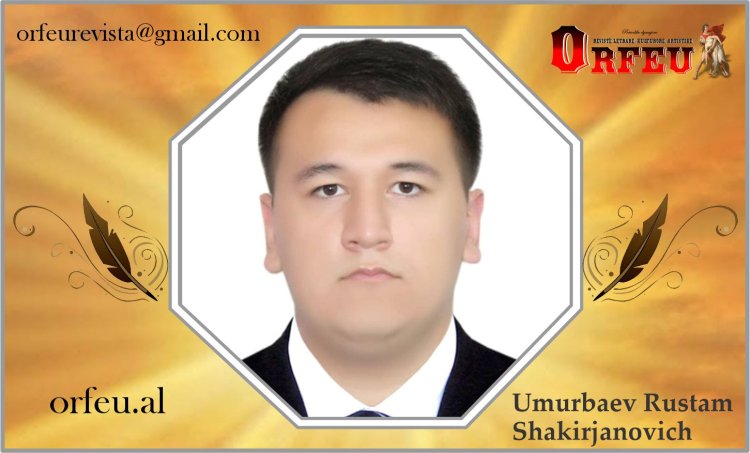
UMURBAEV RUSTAM SHAKIRJANOVICH
Graduated of Tashkent State University of Oriental Studies
I am Umurbaev Rustam Shakirjanovich. I was born on November 11, 2001 in Yangiyer, Syrdarya region.
In 2008, I was enrolled in the 1st grade of the secondary school 242 of the Almazar district of the city of Tashkent and graduated from the 9th grade in 2017.
In 2017, I was admitted to Uchtepa district Tashkent City Law College and in 2020 I graduated as a “lawyer” specialist.
In 2020, I successfully passed the state tests and received admission to the Tashkent State University of Oriental Studies in the direction of “Economics, Politics, and Tourism of Eastern Countries”; “Political Science”.
In 2024, I graduated from Tashkent State University of Oriental Studies.
I know Arabic, English, and Russian from foreign languages.
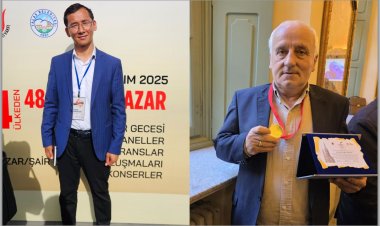
On December 18, 2021, I took an active part in the “International Arabic Language Day” event at the Tashkent State University of Oriental Studies and I was awarded a letter of thanks.
In 2021, I was awarded letter of gratitude at the Tashkent State University of Oriental Studies.
On January 28, 2022, I was participated in the online course “Digital Marketing” and I was awarded a certificate.
On February 24, 2022, I was attended an online course “Moral Foundations of Politics” and I was awarded a certificate.
On March 14, 2022, I was attended an online course “Global Diplomacy – Diplomacy in the Modern world” and I was awarded a certificate.
On March 18, 2022, I took an online course “Geopolitics of Europe” and I was awarded a certificate.
On December 7, 2022, I was awarded a certificate for my active participation in the “Festival of Oriental Students – 2022” at the Tashkent State University of Oriental Studies.
On March 16, 2023, I was published a scientific material in the International Scientific Journal “ОБРАЗОВАНИЕ И НАУКА В XXI ВЕКЕ” and I was awarded a certificate.
In 2023, I was awarded statuette for active participation in the nomination “TA’LIM TIZIMIGA QO’SHGAN HISSASI UCHUN”.
I am a recipient of honorary awards such as the following:
“Altin Qiran”;
“Xalqlar do’stligi”;
“Abay”;
“Jadidchilar izdoshlari”;
“Millat umidi”;
“Ta’lim sohasidagi xizmatlari uchun”;
“Ta’lim iftixori”;
“Faol tadqiqotchi”;
“Yurt iftixori”;
“International Scientific Researcher – 2023”;
“Scientific Researcher – 2024”.
«OPERATION «FRICTION»» (24.08.1990-28.02.1991)
Abstract. This paper was written by a student attending the Canadian Forces College in fulfilment of one of the requirements of the Course of Studies. The paper is a scholastic document, and thus contains facts and opinions which the author alone considered appropriate and correct for the subject. It does not necessarily reflect the policy or the opinion of any agency, including the Government of Canada and the Canadian Department of National Defense.
Key words: completion, prioritize, determined, coordinated, rehabilitation.
Introduction
In August 1990, the Canadian Forces embarked on two operations. The first, «Operation «Salon»», was a domestic operation to restore internal security near two First Nations communities in Quebec. The second was «Operation «Friction»», Canada’s commitment of forces to the Persian Gulf to assist in the implementation of United Nations Resolution. While the Army was able to provide the necessary sustainment for «Operation «Salon»», it quickly became apparent that national resource coordination would be required to support «Operation «Friction»». All materiel requests were passed to the Logistics and Movement Coordination Centers at National Defense Headquarters, subsequently renamed Logistics and Movements. This marked the birth of joint logistics coordination at the strategic level in the Canadian Forces. A strategic level logistics success of «Operation «Friction»» was the completion of major equipment modifications to the deploying ships and Sea King helicopters in less than 14 days.
This success was achieved through a well-coordinated focused effort, led by which saw both military and civilian personnel working to achieve the necessary results. These efforts involved procurement staff located in both Ottawa and Halifax, strategic movement of newly acquired equipment to Halifax from throughout Canada as well as from offshore, and the maritime and air technical personnel who conducted the modifications. It does not appear that the same level of strategic direction was in place for personnel management as was being provided for logistics. For example, Maritime Command and Air Command personnel staffs, along with the newly created Personnel staff in NDHQ, worked hard to identify suitable personnel to fill vacant billets. On several occasions both Maritime Command and Air Command competed against each other for the same individual.
Material and Methods
Another area of difficulty at the national level was the coordination of scarce air transport assets. Prior to «Operation «Friction»», Air Transport Group maintained a small cell in Ottawa next to the National Defense Operations Centre. This cell was able to provide staff with information on operations; however, it did not have the authority to task aircraft. All requests for schedule changes, whether generated by or the Environmental Commands, were sent to the Air Command Operations Centre in Winnipeg for prioritization. The existing air transport tasking methods proved unresponsive with the need for short-notice diversion of aircraft in order to transfer materiel from other bases or defense contractors. The cell in Ottawa was expanded and became the National Defense Movement Control Centre, part of Movements. Began issuing aircraft tasking through the shifting the Air Command Operations Centre to the status of an information addressee.
While seen as a positive step, the change in the Air Transport tasking process generated tensions between Trenton, Winnipeg, and Ottawa, highlighted by the following two examples. On 14th September, 1990, Canada announced the deployment of from Europe to the Persian Gulf region. Under pressure to respond quickly, even though a final destination in the Gulf region had not been determined, placed the necessary transport aircraft on standby in Lahr. After eight days sitting on the tarmac awaiting deployment orders, and forcing the cancellation of other scheduled tasks, the aircraft were finally released for other missions. The eventual deployment did not commence until 2nd October, 1990. According to Major Jean Morin, Canada’s Gulf War historian, this violated the air transport principle of «... should have been told what needed to be moved, when it needed to be moved, when the loads needed to get there, and be left to accomplish the task in the most efficient way».
Results
Command and control of an in-theatre Challenger, allocated for command and liaison, also caused difficulties. Believed that the Commander of the Canadian Forces Middle East should submit each flight request to ATG. The five-day planning cycle was not responsive enough to meet Commander rapidly changing requirements, and so intervened, assigning operational control of the aircraft.
In-theatre operational logistics was initially coordinated through two separate organizations. The Navy established in Bahrain, tasked to provide the deployed ships and Sea King helicopters with the full range of sustainment, including naval/aircraft engineering support and personnel services. Canadian Forces Europe established the Canadian Forces Support Unit (Qatar) to provide traditional base support functions for the deployed aircraft as well as for the ground security forces from 4 brigade Lahr. Responsibility for third-line aircraft maintenance and personnel sustainment was retained in Canadian Forces Europe.
Discussion
Operational level headquarters, was established in Bahrain on 6th November, 1990, with a Deputy Chief of Staff Support that contained both a Personnel and Logistics section. While operational command of both canmarlodget and Qatar was eventually transferred to Commander canforme, the principal support relationships with Maritime Command and Canadian Forces Europe remained unchanged.
These complex support relationships caused difficulty on 1st January, 1991, 15 days prior to the commencement of the air campaign, when previously planned changes in the Canadian Forces Europe command and control structure went into effect. Air Command in Winnipeg became responsible for supporting all deployed aircraft, except the Sea Kings, while Mobile Command assumed sustainment responsibility for the ground security forces. Canadian Forces Communications Command was responsible for sustaining the 90th Signals Squadron.
Conclusion
The has also not been assigned responsibility for personnel management, leaving the potential for many of the sustainment problems identified by the Board of Inquiry Croatia to reoccur. While an alternative model does not currently exist that can be adopted without modification, the United Kingdom model does offer a potential improvement. The doctrine should include specific responsibility for personnel regeneration, reconstitution, and rehabilitation. This addition, combined with an integrated sustainment command and control system, would go a long way to providing Canada with a world class sustainment capability.
Acknowledgement
The proposed Canadian Forces Joint Support Group will provide a formed unit that has specific assigned responsibilities for operational sustainment. This initiative will help to focus the staff on their strategic level responsibilities and improve the activation of new missions. The will also represent a significant improvement over the notional National Level Units that exist under current doctrine. However, the does not provide the Joint Force Commander with a single point of contact for sustainment issues. Duplications in responsibility will exist between and the Joint Force Commanders staff.
References:
1. Farmen, W. N. “Wanted: A NATO Logistics Headquarters.” Joint Force Quarterly Spring, 1998: 62-66.
2. Morin, J. “The Command and Control of the Air Transport Group during the Gulf War.” Proceedings: 3rd Annual Air Force Historical Conference. Winnipeg: National Defense, 1998: 117-124.
3. Reynolds, K. “Canadian Forces Operations in the Balkans, 1991-1995.” Reports and Studies: Board of Inquiry - Croatia. Ottawa: National Defense, 2000: 1-12.
4. White, M. S. “Gulf Logistics: Blackadder’s War.” London, Brassey’s.