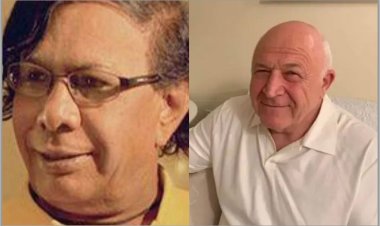


Jakhongir Nomozov - Interview with Agim Bajrami
 Moderator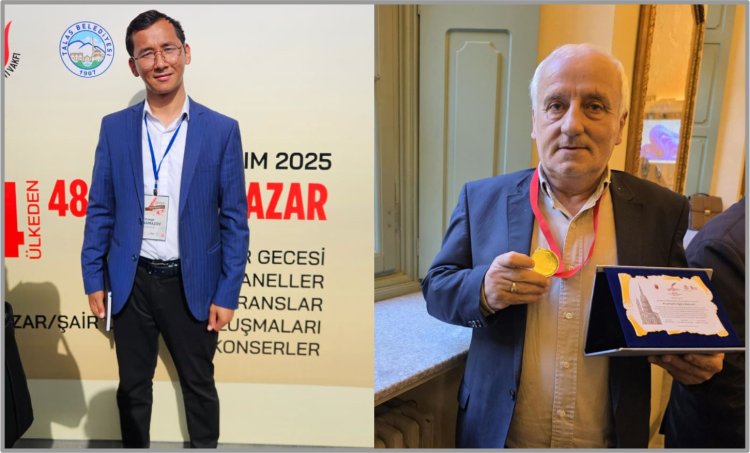
“FROM THE WOUNDS OF HISTORY TO THE HOPE OF THE WORD…”
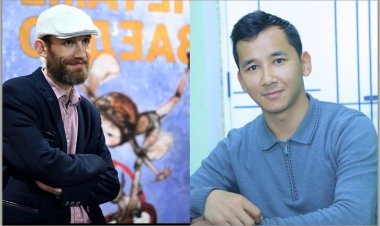
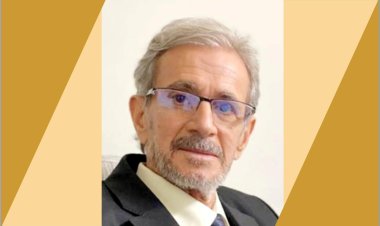
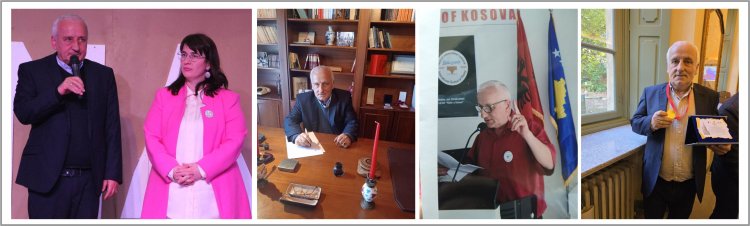
Literature is the art of words - such a noble form of art that it becomes a golden bridge connecting hearts to hearts. Literature does not choose a nation, nor does it recognize borders. Our guest this time is the well-known Albanian poet, writer, and journalist, the President of the Durrës Writers and Artists Association, the recipient of numerous national and international literary awards, and the author of nearly twenty books of poetry, prose, and publicistic works - Agim Barjami.
Jakhongir Nomozov: You were born into a family of Cham Albanian refugees who were forcibly expelled.
A person does not choose their fate, but they can give it meaning.
How do you think you have given meaning to your personal fate?
Agim Bajrami : The story of my family’s fate is the same as that of thousands of innocent families from the region of Chameria, a fertile and wealthy land that had the misfortune of being violently separated from the mother state and subjected to a terrible genocide by the Greek state for decades. The year 1945 was a dark year for the inhabitants of this region beyond Albania’s southern border. As in Gaza, where Zionists killed and massacred thousands of innocent people.
The same tactic was followed in Chameria. Within a few weeks, thousands of innocent inhabitants—women, men, and children—were killed and massacred. The brutality of the occupier was so great that even unborn babies in their mothers’ wombs were not spared. A person never wishes to leave their home and land, but there are circumstances in which they are no longer masters of their own destiny. Small nations have always been part of the dirty games of great powers. Under these conditions, in order to save the remaining lives, our families were forced to leave their centuries-old homeland and seek shelter in the other part of their homeland, in Albania. It was a forced and rapid departure, with only a sack of bread and a blanket over the shoulder, into a country that had just emerged from war itself and possessed no means to help us.
After wandering for months from village to village, sometimes fed and sometimes hungry, my mother lost her only brother and her father due to harsh living conditions and hunger, while my father lost many relatives.
Nevertheless, my family did not surrender to fate. Through hard work and great effort, we managed to settle in the small town of Cërrik, to find employment, and to adapt to the conditions and the people we found there.
In that town, I completed elementary and secondary school, while I pursued my university studies at the Faculty of History and Philology, Department of Albanian Language and Literature, without leaving my job, in Elbasan.
It was during these years that I began to understand that in order to face life and fate, a person must be prepared and not fragile.
I began to read every book that came into my hands and to take notes from time to time.
It is said that reading softens a person’s soul and pushes them toward the process of knowing and understanding life, toward inner reflection and the search for their place within the family and society.
It was during this period that I began to write and publish my first works in the few available press outlets, and to feel within myself the magic of creation.
JN: What kind of spiritual wound does the violent loss of one’s homeland leave in a person’s soul, and how can this wound find healing through creativity?
AB: Even though decades have passed, I still remember my grandmother’s tearful eyes, how she would let out a deep sigh whenever someone mentioned the old house, the large courtyard, and the deceased relatives she had left behind, whom she had no possibility of visiting at their graves. She and many of her contemporaries died with their eyes turned toward Chameria, the homeland from which they had been forcibly expelled and which they were never allowed to see again. They passed away heartbroken, carrying regrets known only to them.
My father, may he rest in peace, used to tell me that a person without a homeland is like a rolling stone. I have tried to use this tragic metaphor in many of my poems, and it seems to me that this creative act has somewhat calmed me.
JN: What inner emotional or spiritual states of the human being do you most often seek to explore in your literary works?
AB: Living in a country with a fragile and underdeveloped democracy, I often encounter violent scenes and desperate people abandoned in the streets, or girls and women severely abused by men or by their husbands. This causes a strong shock not only to my mood, but also to the engines of my creativity, and a powerful sense of pain and rebellion immediately overwhelms me. This is because a writer cannot remain indifferent in the face of such situations. In reflecting them, he brings into play his entire creative arsenal, including his soul.
On the other hand, in my works love lyricism occupies a visible place, the feeling of a kiss, of waiting, of longing, and of small quarrels. To make these emotions more tangible, I have tried to incorporate the silent world of objects and the voiceless language of nature. Their harmonization gives greater expressive and emotional power to my creations.
JN: Is the inner solitude of the poet a form of human loneliness, or a dialogue with the divine?
AB: Most writers are individual and solitary beings. They continually withdraw from noisy environments, not only to organize their thoughts, but also to escape the terror of the worthless ordinary. Franz Kafka considered solitude a painful but very necessary condition in order to penetrate deeply into oneself and extract what is essential from within.
I appreciate solitude in the moments when I need to meditate on specific issues and problems related to the creative process. I consider this part of the normal routine of a writer’s work.
JN: How should a poet respond to the global challenges and crises of today’s world?
AB: All poets are, in themselves, barometers of flesh and blood upon which the events and crises of today’s world inevitably leave their marks. Their ways of reacting may differ, but the object upon which this reaction is poured remains freedom and endangered democracy.
Eliot, Lorca, Kadare, and others have not only always raised their voices in protest regarding such issues, but have also given their works a strong polemical character and spirit. They have consistently placed themselves at the forefront of their emancipated societies, standing in open opposition to the respective powers.
“Teach time not to devour its own. What is born of ugliness, poets mend,” wrote one of our most distinguished voices, Din Mehmeti, and he was right.
JN: In what phase do you think Albanian literature finds itself today?
AB: Albanian literature emerged from a long and frightening period of the so-called Socialist Realism, whose aim was to place it in the service of the Bolshevik dictatorship. As such, it was a literature without conscience and without true artistic form. In conditions of lack of freedom of expression and confinement within rigid frameworks, that literature could not claim to become the voice and mirror of the time and society to which it belonged. In our country, those who dared to bring a somewhat different form and voice from the others were punished with imprisonment and other severe penalties.
The wind of democracy seems to have greatly changed its physiognomy and character. Today, our writers have cast off with contempt the servile and demagogical character of literature in service to power and feel freer and more open to grasp and address, in their own way, whatever they think. The themes of revolution and class struggle have now been replaced by contemporary themes and historical ones, rich with subjects drawn from life and the past.
Today, we no longer have just a handful of writers and poets who wrote according to the orders and wishes of the leadership. On the contrary, we have an interesting group of dedicated writers and poets with broad horizons, such as Besnik Mustafaj, Bashkim Hoxha, Viktor Canosinaj, Rifat Ismaili, Vahid Hyzoti, Mujo and Skënder Buçpapaj, Rudolf Marku, and others, who have brought a different kind of style and conceptual approach, thus being welcomed not only by our readers but also by foreign ones. Such creators no longer hesitate to expand their writing ranges, experimenting even with themes and ideas that until yesterday were considered forbidden and taboo by the regime and its loyalists.
JN:Through your works for children, which values and life lessons do you aim to convey to young readers?
AB: I grew up in a fruitful period for children’s literature, when being classified as a children’s writer, unlike today, meant carrying the respect of people and society. Symposia were organized, meetings with readers were held, anthologies were published, competitions took place, and so on. Today, indifference dominates this type of literature, and the state’s interest is almost zero.
The literature I write is diverse: poetry, fables, poems, riddles, fairy tales. The ideas I strive to convey, together with a handful of my colleagues, are the transmission of the best educational values to young readers: the praise of work, sound morality, the cultivation of initiative and collective spirit, love of country, respect for parents, and so on.
Naturally, although it may seem simple to write for children, one must place oneself at their age and level of aspiration, touch their world, and explore it. Some writers have succeeded in doing so; others have not and have failed.
JN: What do you consider most essential to protect and preserve in children’s literature?
AB: The absence of well-known names in children’s literature is being exploited today by people who have no connection to true literature. In fact, more than writers, most of them are literary impostors, people hungry for money, who place profit above the needs of young readers, their education, and the cultivation of their finest values.
These individuals do not know the beautiful world of children at all; they have not read the well-known postulate of Astrid Lindgren that our children need books that give them courage, not books that destroy their dreams. Instead, they fill their works with empty stories and absurdities that make one nauseous.
For a book to be considered good, it must be appreciated not only by children but also by adult readers. A good book should open before its reader a world of its own, stimulate their imagination and creative spirit. The young reader is eager to discover the world; therefore, on every page they should find something of their own spirit of exploration and adventure, but also something of the great spirit of the world.
JN: What do you think is the greatest tragedy of unknown or unappreciated talent?
AB: The greatest tragedy of a talent is euphoria and laziness. The greatest masters of literature, such as Leo Tolstoy and Stefan Zweig, have addressed several times the theme of the growth and development of talent. Tolstoy said that to open the doors of success, a young creator needs fifty percent talent and fifty percent work.
Love for literature is a difficult love. Blessed are those who have known how to recognize its demanding nature and have persisted in loving it unconditionally.
JN: Misfortune does not come only from outside; it often arises within us.
How do you think humanity should confront the inner vices that are eroding it from within?
AB: The human being is one of the most complex creatures, and this constantly exposes them to dangers. Egoism, greed, jealousy, and servility are among the most well-known and active vices that have historically attacked humanity.
A good part of them are rooted in a lack of culture; others are inherited.
Literature and art possess the most effective means to fight these destructive phenomena. It is no coincidence that many authorities in literature and philosophy have emphasized the conviction that books and reading are capable of softening human hearts.
JN: Some believe that all people have equal potential and that differences arise mainly from circumstances and conditions.
What is your opinion on this idea?
AB: World practice shows that people are not born and do not grow up in the same conditions and circumstances and, consequently, their potentials cannot be equal. Someone will inevitably stand out from others, will receive more recognition and attention, and this inevitably leads to differences.
The gradual accentuation of these differences, together with favorable circumstances and conditions, can badly degrade them, creating sharp contrasts and strong clashes with those around them. The examples of history are very meaningful in this regard.
JN: How do you assess the relationship between Albanian literary heritage and contemporary Albanian literature?
AB: Regarding the relationship between literary heritage and contemporary literature, opinions vary widely. Some prefer horizontal lines of continuity, while others favor separation from heritage. I have always belonged to the first group.
As a supporter of this line, I have always believed that good literature cannot develop in a vacuum, but only in close connection with its roots.
Albanian poetry, for example, could not have reached its current stage if it had severed its ties with our wonderful southern and northern folklore, or without the magnificent poetic heritage of Jeronim de Rada, Ndre Mjeda, Gavril Dara, and others.
JN: In your opinion, how do intercultural literary connections contribute positively to humanity?
What role does contemporary literature play at the international level in promoting peace and friendship among nations?
AB: In my opinion, intercultural literary connections among different countries and peoples are very important and necessary.
First, because nations need to become acquainted with one another’s achievements, but also to benefit from their diverse experiences and schools of thought.
The circulation of these values strengthens mutual relations and respect among them.
All the more so for us, as a small nation, we have such a strong need to have in our libraries the books of the great patriarchs of these countries, learning at the same time much from their experiences and greatness. To achieve this, cultural institutions between respective countries play a major role.
JN: How has reading and studying the literature of different peoples transformed your way of thinking and your imaginative world?
AB: For a writer, reading and studying the literature of different peoples has many benefits and advantages; therefore, it is a necessity.
Becoming familiar with new writing concepts and models from renowned authors and assimilating their experience and mastery constitutes an extraordinary wealth that should never be neglected.
Personally, I believe that through such reading I have grown professionally, while my imagination has gained new dimensions.
JN: Does talent naturally find its own path, or does it necessarily need support and encouragement in order to flourish?
AB: Literature is a passion and a fire that warms you throughout life, but for a talent, no matter how gifted, this alone is not enough. I do not remember where I read that a talent, in its earliest beginnings, needs a guiding hand and supportive backing, just as a small child needs its mother.
Creating a warm environment and atmosphere around them, engaging in long and continuous conversations, offering friendly advice, remarks, and suggestions ,all these generate positive energy that tomorrow may translate into success and achievement.
We must learn from the good examples of cooperation among the great literary giants of the past and make these examples a reality in our present-day relationships with young people.
It is very important to move forward with the motto: “A promising talent today may become a great writer tomorrow.”
Kindness toward others produces only good.
Interviewed by:
Jakhongir NOMOZOV,
is a young poet and journalist from Uzbekistan.
He is also a Member of the Union of Journalists of Azerbaijan and the World Young Turkic Writers Union.