

Jakhongir Nomozov - Interview with Fatemeh Saba Jafari
 Moderator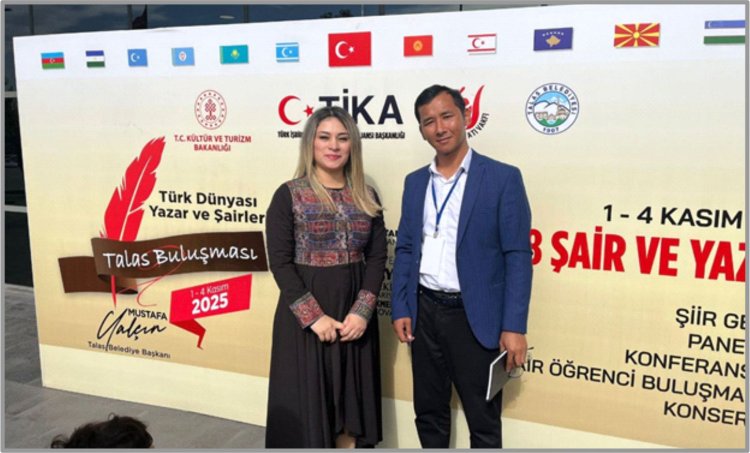
“AN ARTIST IS A PERSON WHO CAN HEAR SILENCE, SEE THE WIND, AND SPEAK TO SHADOWS”
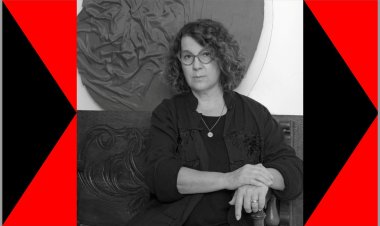
Today’s guest is internationally renowned miniature, illumination (tezhip), and illustration artist, a lecturer at Yeni Yüzyıl University, and curator of numerous prestigious exhibitions - Fatemeh Saba Jafari.
Winner of the International Painting Competition (1st place), the Traditional Arts Competition (2nd place), and the Photography Competition (3rd place), she has curated major exhibitions such as “4 Minutes of Art,” “UNESCO 2023 - Year of Aşık Veysel,” and the acclaimed “Dede Korkut” series.
By merging traditional miniature and illumination with modern aesthetics, Fatemeh Saba Jafari offers viewers a visual feast and a refined artistic experience.
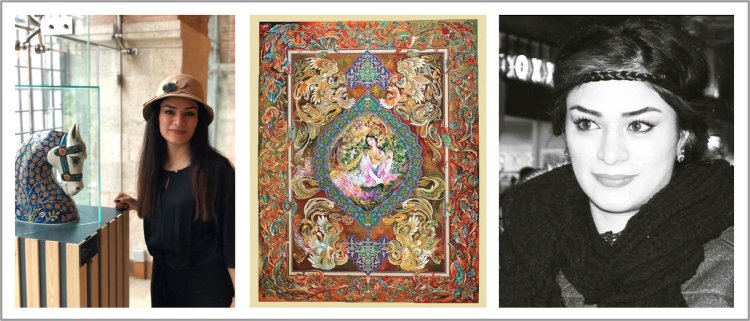
- No matter how much a person grows, they always long for their childhood. They seek the peace, the freedom, the sincerity, and the purity of those days. One should never sever their bond with childhood; instead, they should keep it alive within.
I grew up in an artistic family. I loved painting and poetry; I always wrote and drew. But what shaped me the most were the bedtime stories my parents told us. Those stories hold a sacred place in Turkic mythology and epics - they are the light of our shared cultural memory.
Since then, I have always thought: “I want to introduce these visually to the world. I want everyone to know them, to live them.”
The first steps of my artistic journey began with those childhood stories. Each tale lit a spark in the hidden corners of my soul; every narrative was like a melody waiting to come alive in my miniatures and illuminations.
- With the motto “The Journey of Miniature into the 21st Century,” you bring classical art into a modern context. How do you balance tradition and innovation? What excited you most while preparing your exhibition “From Altai to the Caspian”?
- In my solo exhibition titled “The Journey of Miniature into the 21st Century,” I tried to reinterpret miniature from the perspective of today’s viewer. Modern people no longer want to see miniature only inside books; they want to experience it on walls, to stand in front of it, to feel its presence.
For that reason, I worked in large formats - as if the miniature were looking directly into the viewer’s eyes. I remained loyal to traditional techniques but added new lines, new expressions, carrying miniature into the spirit of our age.
“From Altai to the Caspian” was another magical experience. Bringing together the shared soul of the Turkic world — its mythology, values, and cultural bonds - created an indescribable excitement. Each geography has its own spirit, and reflecting these on the canvas transformed miniature into a living visual language.
- Is miniature for you merely ornamentation, or is it a spiritual state - an inner dhikr?
- Miniature is not just decoration; it is a language that carries the artist’s soul, thoughts, and stories. Each color is a breath. While working, time stops, the world grows silent, and an inner journey begins. Every brushstroke becomes a quiet meditation - a zikr of the soul.
- The stories of “Dede Korkut” hold a special place in your work. What do these legends mean to you?
- “Dede Korkut” is more than a book - it is a sacred voice reminding me of my roots and identity. Each reading reveals new meanings. These stories are not ordinary tales; they are the thousand-year reflection of Turkic courage, ethics, and spirituality.
I believe it is time to return to ancient Turkic values. The women in these narratives, in particular, have always inspired me with their nobility and strength. Keeping their legacy alive is an artist’s duty.
“Dede Korkut” is a wise elder to me - a cultural treasure that reminds us who we are and what spirit we carry. That is why I devoted my thesis to him; both artistically and academically, it is a passion and a responsibility.
- Is there a painting that still lives in your heart yet remains unfinished?
- For every artist, a blank canvas is the beginning of infinite possibilities. Even when I finish a work, I still think, “I wish I had worked a little more.”
Miniature is a world of endless detail; a painting never truly ends - it continues to live quietly within.
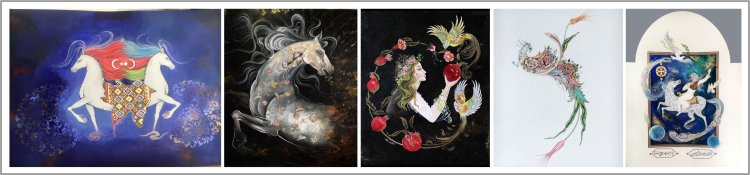
- Teaching art means illuminating someone else’s path; living art means diving into one’s inner world. One faces outward, the other inward - yet both nourish each other.
- If you could express your entire artistic journey with a single symbol, what would it be?
- Definitely the horse. In the Turkic world, the horse symbolizes freedom, courage, and journey. It is the companion of nomadic life and the soul of our epics. For me, it embodies my spirit and creative energy.
- Which color expresses your heart most clearly?
- I believe every color carries its own energy. The closest to my heart is turquoise - the color of serenity, spirituality, and inner balance. I also love the contrast of black and white; each artwork demands its own palette.
- You have participated in many international exhibitions - Turkey, Iran, Italy, Dubai, Cyprus. What did these experiences bring to you?
- Each international exhibition offers a new perspective and the chance to meet a different culture. Seeing the aesthetic taste of each society enriches and broadens my artistic vision.
- What lessons should modern people take from ancient myths?
- Myths are not echoes of the past; they are spiritual maps connecting yesterday to today. Each legend is a teacher, each hero a guide.
In the fast pace of modern life, people should learn patience, courage, and wisdom from these stories. Myths help us understand our fears, hopes, and responsibilities. They build a bridge between past and present - reminding us of the essence of being human.
- What does “freedom” mean to a woman artist?
- Freedom is not only external independence; it begins with listening to the inner voice. Freedom is letting colors and lines flow without limits - expressing emotions, thoughts, and dreams without fear of judgment.
It is courage: the courage to create one’s own path. For me, freedom is the wind brushing my shoulders, the sound of a wild horse galloping across the steppe, and the bravery of the heroes living within my miniatures.
- How do you measure success in art?
- True success is found in inner peace and the depth of my creations. Awards and recognition matter, but the real measure is the power of inspiration and the universality of art.
- What kind of person is a true artist?
- A true artist is someone who is loyal to their inner voice. They are brave, patient, sensitive, observant, and compassionate. An artist creates not only with technique but with soul - touching hearts, offering meaning and beauty.
Art begins where the spirit is free and becomes eternal when it resonates within the viewer.
Jakhongir NOMOZOV,
is a young poet and journalist from Uzbekistan.
He is also a Member of the Union of Journalists of Azerbaijan and the World Young Turkic Writers Union.