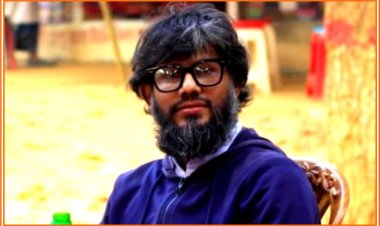


Kamrul Hasan: A Chronicler of Life, a Friend of Words, and a Humanist at Heart Nurul Hoque
 Moderator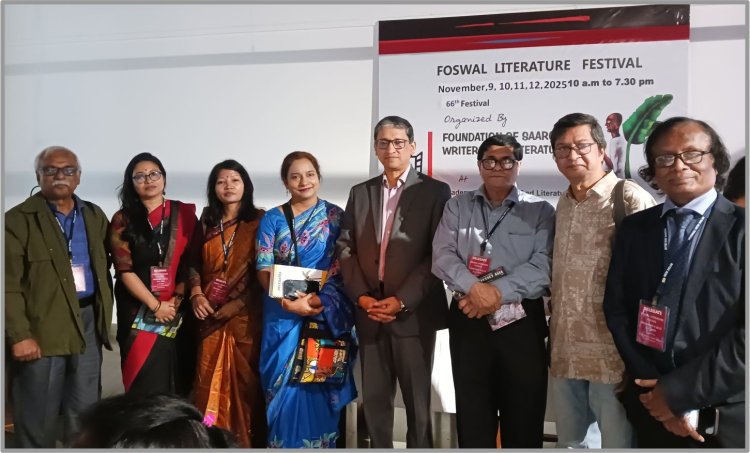
Kamrul Hasan: A Chronicler of Life, a Friend of Words, and a Humanist at Heart
Nurul Hoque
Nurul Hoque
There are certain individuals whose presence quietly enriches every moment they inhabit—people who do not merely move through events, but absorb them, preserve them, and return them to the world transformed through words. Kamrul Hasan belongs unmistakably to this rare lineage. He is a poet, a writer of prose and fiction, a university teacher, and above all, a deeply humane soul. Yet these descriptors alone remain insufficient. Kamrul Hasan is, in essence, a chronicler of life—someone who listens attentively to time itself and translates its fleeting rhythms into enduring literature.
On the occasion of his birthday, it feels both natural and necessary to pause and reflect upon the life, work, and quietly extraordinary character of our friend Kamrul Hasan. Some writers write to escape life; others write to interrogate it. Kamrul writes to preserve it. His pen is not driven by abstraction or performative urgency, but by attentiveness—by an almost instinctive alertness to moments that others might overlook or dismiss as ordinary.
One of Kamrul’s most defining qualities as a writer is his irrepressible urge to document experience as it unfolds. He is a chronicler by temperament. Wherever he goes, whatever he witnesses, his first impulse is to record. I have personally observed this habit on countless occasions. During our travels together, amid casual conversations, shared laughter, prolonged silences, or unexpected encounters, Kamrul would often reach into his pocket, pull out a small scrap of paper—what we affectionately call a chir-kut—and begin jotting something down.
At first glance, these notes may appear inconsequential: a phrase overheard, a fleeting image, a passing emotional response. Yet Kamrul possesses a rare literary alchemy. These fragments of lived reality, gathered patiently over time, later re-emerge as reflective essays, intimate narratives, or entire books. His writing does not originate in abstraction; it is born directly from lived experience. He listens to life carefully, and life, in return, reveals its layered meanings to him.
This method finds one of its most accomplished expressions in his book Ei Nogorir Joto Shahityobasor (All the Literary Programs of this City), published during the Ekushey Book Fair of 2024. The book stands not merely as a collection of writings, but as a living archive—an intricate mosaic of literary moments, cultural gatherings, conversations, and shared histories. It captures the intellectual and emotional geography of a city’s literary life with remarkable sensitivity and depth.
I was fortunate enough to collect a copy of this book, and in return, I gifted Kamrul my selected sonnets—a modest but heartfelt gesture of mutual literary affection and respect. That exchange symbolized something deeper: a shared belief in literature as dialogue, as companionship, and as a collective responsibility.
Beyond the writer, Kamrul Hasan the human being is equally luminous. He carries himself with gentleness and approachability. His smile is constant, his laughter unforced, and his conversations infused with warmth. Despite his scholarship and literary achievements, there is no trace of arrogance in him. His erudition never distances him from people; rather, it draws him closer. He listens more than he speaks, observes more than he declares, and responds with empathy rather than judgment.
A particularly memorable chapter of our shared journey unfolded in November, when we traveled together to New Delhi to attend the SAARC International Literary Conference, held from the 9th to the 12th. The conference was a vibrant confluence of poets, writers, thinkers, and cultural voices from across South Asia—a region bound by shared histories, layered identities, and a deeply intertwined literary heritage.
For Kamrul, the conference was never merely a formal event. It was an immersive experience—an opportunity to engage, to listen, to exchange ideas, and to observe the many textures of South Asian literature. Panel discussions, poetry readings, conversations over tea, and spontaneous night dialogues all contributed to an atmosphere of creative energy and intellectual camaraderie in hotels dining or lobby . Kamrul absorbed it all quietly and thoughtfully, as he always does. Kamrul’s receipt of the SAARC Literature Award at the said event deeply impressed us all. I regard this achievement as not only a personal honor for him, but also a significant accomplishment for Bangladesh as a whole.
Our journey itself added another unforgettable dimension. On our evening flight from Dhaka to Delhi, the darkness outside the aircraft windows deprived us of the opportunity to witness the Himalayan range. There was a brief moment of disappointment, but it passed without complaint.
On the return journey, however, destiny seemed generous. The afternoon flight revealed the Himalayas in their full splendor through the left-side windows of the aircraft. Snow-clad peaks stretched endlessly beneath daylight—vast, silent, and awe-inspiring. It was as though nature itself had decided to speak.
I noticed a sudden, almost childlike excitement in Kamrul. His eyes lit up with wonder. Unfortunately, his phone lacked sufficient memory to capture the unfolding spectacle. Without hesitation, he took my phone and began photographing the mountains—frame after frame—his hands steady, his concentration intense. It was not the impulse of a tourist, but the response of a poet encountering sublimity.
That moment revealed another essential dimension of Kamrul Hasan: his deep and abiding love for nature. Landscapes move him, mountains stir him, and skies speak to him. His passion for photography—particularly nature photography—is an extension of this sensibility. Through the lens, he does not merely seek images; he seeks meaning. The Himalayas that afternoon were not merely mountains; they were silent poems. And Kamrul was instinctively gathering verses—through images, memory, and emotion.
Perhaps Kamrul Hasan’s most admirable quality, however, lies in his generosity toward fellow poets, especially those who are younger or less established. Kindness, in his case, is not rhetorical; it is embedded in action. He has consistently demonstrated that true literary maturity is measured not only by personal achievement, but by one’s willingness to uplift others.
In Ei Nogorir Joto Shahityobasor, this generosity becomes particularly evident. Kamrul brings junior poets into the center of serious literary discourse through analytical yet fluid prose. He neither patronizes nor exaggerates. His writing offers context, critical depth, and intellectual dignity. Through careful analysis and narrative sensitivity, he transforms emerging voices into visible presences within the literary landscape.
One such junior poet, once relatively unknown, gradually gained recognition following Kamrul’s incisive engagement with his work. The transformation was not accidental. Kamrul’s writing revealed layers that might otherwise have remained unnoticed. Today, that poet occupies a respected position within contemporary literary circles—a quiet testament to the transformative power of ethical criticism. Kamrul never claims credit, yet his influence remains unmistakable.
Following the publication of this book, Kamrul embarked on an even more ambitious literary project—one that further reflects his humanist vision. He began composing a new work tentatively titled Jiboner Mukhgulo (“Faces of Life”). This evolving book is conceived as a series of chapters, each dedicated to a poet—exploring not only literary output, but also life, livelihood, struggle, encounter, and shared memory.
What distinguishes Jiboner Mukhgulo is its holistic vision. Kamrul refuses to separate poetry from life. He writes about where and when he met these poets, how conversations unfolded, what silences lingered between words, and how shared experiences shaped mutual understanding. Each chapter unfolds like a carefully rendered portrait—intimate, analytical, and infused with literary grace.
These writings are not mere profiles; they are living documents of a literary time and space. They capture an ecosystem—Bangla literature as it breathes, struggles, evolves, and dreams. The prose maintains a rare equilibrium between scholarly rigor and emotional warmth, offering insight without intrusion.
It is my firm belief that Jiboner Mukhgulo will attain a lasting place in Bangla literature. Its strength lies in honesty, empathy, intellectual depth, and aesthetic restraint. Through this work, Kamrul Hasan once again fulfills his quiet vocation—not merely as a writer, but as a custodian of voices and a chronicler of human presence.
There remains much more that can be written about Kamrul Hasan: about his role as a university teacher shaping young minds, about his evolving literary corpus, about his discipline, humility, and unwavering commitment to writing. These deserve separate and extended exploration.
Today, however, is a moment of celebration. A birthday that marks not merely the passage of time, but the continued flowering of a life devoted to literature, humanity, and beauty. On this occasion, I extend to Kamrul Hasan my deepest affection, heartfelt admiration, and warmest wishes.
May his days be long, his pen ever attentive, his eyes always curious, and his heart forever generous. May life continue to offer him moments worth recording—and may he continue to return those moments to us, transformed into enduring literature.
About Author
Nurul Hoque is an internationally published poet and editor, with more than thirty books in Bangla and English. He is the editor of OdysseyGlobal, Odyssey Asia, Amader Buriganga and has participated in international literary festivals across South Asia.