

Culture News - International Medals
 Moderator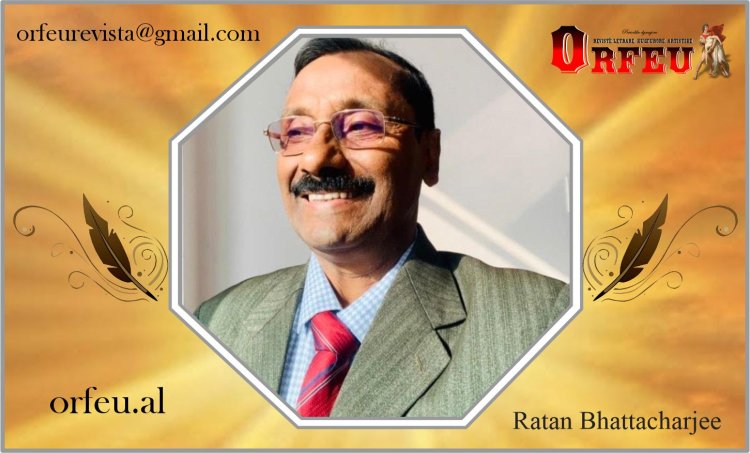
INTERNATIONAL DICKENS MEDAL FOR SIX FEET DISTANCE: RECOGNITION FOR DR.RATAN BHATTACHARJEE
Dr Gunjan Agarwal
The conferment of Dickens Medal is an outstanding recognition for eminent author Dr Ratan Bhattacharjee whose short storie published globally in magazines and newspaper supplements of India and abroad are globally popular . The Covid-19 pandemic did not only attack the human body; it invaded the human mind. Fear entered households more silently than the virus itself. Streets emptied, temples and mosques closed, schools vanished into screens, and human beings—social by nature—were compelled to live apart from one another. In such a moment history required witnesses. Statistics could record deaths, governments could issue advisories, but only literature could record the emotional reality of living through those days. Six Feet Distance: Looking Back to Lockdown by Dr Ratan Bhattacharjee emerges precisely as such a witness. The recognition of this work by the conferment of Dickens Medal therefore carries deep meaning, because like Charles Dickens’s novels of nineteenth-century suffering, this book captures the lived experience of ordinary people during an extraordinary crisis. Dickens Gold Medal International Award was given to him for Literary Excellence 2025-2026 for his “Six Feet Distance “( AuthorHouse Bloomington USA 2023) in 4th Kolkata Literary Carnival organised by Ukiyoto held today at Indian Council for Cultural Relations .The book stands as one of the earliest South Asian literary responses to the lockdown era. While much global writing on the pandemic came from medical or political perspectives, Bhattacharjee approaches it from the standpoint of lived human experience. He does not write as an epidemiologist, nor as a policy commentator, but as a sensitive observer of society. His concern is the psychological condition of people—fear, uncertainty, loneliness, and emotional exhaustion.
The book thus functions not only as literature but also as a social archive. Future generations reading it will not merely know that a lockdown happened; they will understand how it felt.
The phrase “six feet distance” itself became the most repeated sentence of the pandemic. It was intended as protection, yet it altered human relationships. In South Asian cultures especially, closeness defines social life—touching elders’ feet, embracing relatives, gathering in festivals, sharing food, visiting neighbours without appointment. Suddenly these gestures disappeared. The author records how deeply unnatural this felt. A neighbour seen daily for years now became a possible threat. Even kindness was practiced cautiously. Food was left outside doors; conversations occurred from balconies; greetings replaced handshakes. Bhattacharjee turns this experience into metaphor: the physical distance gradually revealed an emotional distance long present in modern society. The lockdown exposed not only a virus but also a hidden loneliness of urban.
The phrase “six feet distance” itself became the most repeated sentence of the pandemic. It was intended as protection, yet it altered human relationships. In South Asian cultures especially, closeness defines social life—touching elders’ feet, embracing relatives, gathering in festivals, sharing food, visiting neighbours without appointment. Suddenly these gestures disappeared. The author records how deeply unnatural this felt. A neighbour seen daily for years now became a possible threat. Even kindness was practiced cautiously. Food was left outside doors; conversations occurred from balconies; greetings replaced handshakes. Bhattacharjee turns this experience into metaphor: the physical distance gradually revealed an emotional distance long present in modern society. The lockdown exposed not only a virus but also a hidden loneliness of urban.

As a writer, Dr Bhattacharjee has authored numerous essays, features, literary articles, and reflective narratives in both English and Bengali. His themes frequently include human relationships, moral values, social change, cultural memory, and the psychological experiences of modern life. He is particularly noted for interpreting literature not merely as artistic expression but as a moral and social document. Six Feet Distance records the psychological trauma, isolation, and resilience of people during the Covid-19 lockdown period. The work has been appreciated as a South Asian literary response to the pandemic, presenting the emotional reality of ordinary lives during an extraordinary historical moment. The book stands as a social document preserving collective memory and human experience. Dr Bhattacharjee’s literary outlook is deeply humanistic. Drawing inspiration from writers such as Rabindranath Tagore and Charles Dickens, he emphasizes empathy, compassion, and social awareness. His stories often highlight the moral purpose of literature—to awaken sensitivity, encourage reflection, and bring people closer to one another. Today, Dr Ratan Bhattacharjee is regarded not only as a scholar and teacher but also as a chronicler of his time. Through his writings he continues to explore how literature can interpret social realities and preserve human experience. His work affirms that literature remains a vital medium for understanding society, culture, and the inner life of human beings.
One of the book’s strongest dimensions is its portrayal of psychological trauma. The trauma described is subtle and collective rather than dramatic and individual. There are no battlefield explosions, yet anxiety permeates every page. Families waited for news of relatives in hospitals. Migrant workers faced uncertainty about livelihood. Children could not understand why playgrounds were forbidden. The elderly felt the pain of separation most intensely; they were protected by isolation but also imprisoned by it. Through quiet narrative episodes the author reveals insomnia, worry, obsessive cleaning rituals, and fear of contact. He shows how people began measuring safety in inches and seconds. Even breathing near another person appeared dangerous. The pandemic thus created a mental climate of suspicion.
Yet the book is not despairing. Alongside trauma it documents resilience. The author notices acts of compassion: neighbours helping quarantined households, volunteers distributing food, teachers learning technology to keep education alive, families rediscovering conversation. The silence of lockdown allowed people to hear birds again and to hear themselves think again. Bhattacharjee suggests that crisis forced society to reconsider priorities. Material ambitions lost importance while relationships gained meaning. The enforced pause became a moral introspection.
Here lies the connection with Dickens. Dickens wrote about social suffering in industrial England—poverty, child labour, neglected elderly—and he humanized statistics. Bhattacharjee performs a similar function for the pandemic era. He humanizes the lockdown. Instead of reporting case numbers, he narrates human feelings. The narrative voice is gentle and compassionate, never accusatory. Rather than blaming institutions, the book seeks understanding. The author recognizes that humanity collectively faced uncertainty. This moral sympathy, this effort to awaken empathy in readers, justifies the association with Dickensian tradition and explains the appropriateness of the Dickens Medal.
The work also carries strong regional significance. As a South Asian response, it reflects cultural realities distinct from Western lockdown narratives. The book’s value as a social document cannot be overstated. Historians will record policies and timelines, but literature preserves human emotion. Six Feet Distance records conversations between parents and children, silent worries of the elderly, and the moral dilemma of helping others while protecting oneself. Such details create a living memory of the pandemic. It becomes a psychological archive of a society under stress. The trauma registered in the narrative is collective trauma—the awareness of mortality shared by an entire generation.The conferment of the Dickens Medal therefore recognizes not only literary skill but moral relevance. Dickens believed literature must awaken social conscience. Bhattacharjee’s work similarly encourages compassion. Through his poetry, essays, fiction, and criticism, Dr Ratan Bhattacharjee has established himself as not only a scholar and teacher but also a chronicler of his time. His work demonstrates that literature continues to play a vital role in understanding society and nurturing human values.
Ultimately, “Six Feet Distance” reminds readers that crises pass but memories shape the future. The pandemic will become history, yet the emotional lessons—fragility of life, value of relationships, necessity of empathy—must remain. By recording these lessons,Dr Ratan Bhattacharjee has produced more than a memoir of lockdown.He has written a humane testimony of an era.The Dickens Medal thus honours a book that transforms fear into reflection and isolation into shared understanding. It affirms that even in separation literature can bring human beings closer together, and that the pen remains humanity’s most enduring instrument of healing.
The writer is Prof. Dr. Gunjan Agarwal Dean, School of Liberal Arts and Languages
Shobhit University Gangoh (Saharanpur) UP
Shobhit University Gangoh (Saharanpur) UP
Email [email protected]