

Taghrid Bou Merhi - THE POETIC WORLD OF IRIS CALIF
 Moderator
BETWEEN THE HUMAN AND THE DIVINE: THE POETIC WORLD OF IRIS CALIF
An Introduction from Iris Calif’s Fourth Book, Forthcoming in 2027
Written by Taghrid Bou Merhi
Since the very first words ever spoken by human beings in their confrontation with the awe of existence, poetry has been the closest means to utter what cannot be uttered, to translate what cannot be translated, the feelings of estrangement, wonder, love, and fear. Poetry is the deepest form of human consciousness, the gateway through which one passes from the tangible to the absolute, from the finite to the infinite. It is not merely a linguistic art.
Hölderlin, the German poet and philosopher, compared poetry to “the dwelling of man in the world.” Poetry, then, grants us another language with which to inhabit this universe, a language vast enough to contain our anxiety, our burning, our dreams, and our fears, while opening before us new existential possibilities.
Adonis sees poetry as “a second birth of man,” for it recreates us every time we dive into its depths and allow it to chart new pathways within our awareness. For Baudelaire, poetry is “the inner music” that allows the soul to soar beyond the prison of the everyday.
It is within this horizon that the poetic experience of Iris Calif emerges as a unique voice, one that weaves together profound human emotion and a universal spiritual dimension. Her poems are not merely personal confessions; rather, they are written through symbols drawn from religion, nature, and womanhood, opening before the reader worlds filled with questions, worlds saturated with imagery that transcend the private moment to reach the questions of the universe itself.
Most of Iris Calif’s poems revolve around a central duality: earth/sky, body/spirit, femininity/cosmic universality. This duality does not appear as mere ornamentation of language; it is lived as an existential reality by the poet in each text. In the poem The Iris Flower of Your Heart, the body becomes the stage of a cosmic dance, a “naked ballerina” embodying the celestial flower, transforming love into a universal prayer. Meanwhile, in The Divine Human Flower: The Iris, the symbol assumes a profound philosophical dimension where the “human flower” becomes an icon of cosmic peace.
This intense presence of both body and spirit brings her work close to the experiences of some Arab women poets, such as Saniya Saleh or Lamia Abbas Amara. Yet the difference lies in Calif’s sanctification of the body: it is no longer a mere body but becomes a language of divine love, a medium of communication between humanity and God, between earth and heaven.
Her poetry cannot be read without noticing the strong presence of sacred texts and religious myths. Words such as God, Torah, the Land of Canaan, David, and Gabriel recur in several poems, affirming that Calif’s poetic vision is not confined to the personal, but extends into a collective, religious, and mythical heritage.
Here, one can compare this use with that of T. S. Eliot in his famous poem The Waste Land, where he summoned religious symbols and myths to express the crisis of the modern world. The difference, however, is clear: Eliot invoked them to reflect collapse and despair, while Iris Calif invokes them to construct hope and promise, affirming that “the human flower” is capable of spreading peace in a troubled world.
Poems such as The Crown of Life and Longing for Life carry a distinctly feminine voice that speaks of bodily pain, illness, and fragility, but they go beyond mere complaint to transform suffering into an act of resistance. In The Crown of Life, we read a journey of confrontation between the body and its vulnerability, where the “iris flower” becomes a symbolic image of a woman who struggles, dreams, and transforms her pain into a source of strength.
In this respect, her work recalls the American poet Sylvia Plath, who wrote extensively about her body, her pain, and her psychological struggles. But while Plath stopped at the edge of tragedy, Calif carries the experience into transformation toward hope and the search for redemption. She writes of illness not as a final destiny but as a gateway to new life, a new “crown” of light.
In The Desert Bride, the desert turns into a dual symbol: on one hand, it embodies harshness, emptiness, and barrenness, but on the other, it is a space of love and spiritual fertility. This recalls Fadwa Tuqan’s use of the desert as an image of alienation and suffering, yet Calif adds a different layer, transforming the desert into a site of spiritual matrimony, where the soul weds the world in a poetic ritual.
The moon, the sun, the wind, the sea, the river, the flowers, these elements recur throughout the collection, forming the core vocabulary of the poet. They are not mere decoration but foundational structures of her vision of the world. The moon is not simply a celestial body; it is a living being carrying the voice of God. The wind is not simply air in motion but a messenger of hidden secrets.
In this respect, one finds a resemblance with the Romantic poets, Wordsworth, Keats, and others, who gave nature a central role in their poetic experiences. Yet with Iris Calif, nature is always interwoven with religious symbolism; it never stands apart from the sacred.
It is striking that this collection does not only speak of the self but of humanity as a whole. In The Divine Human Flower or The Living Daughter, we encounter a discourse that transcends individual experience and becomes a message to the world: that true humanity resides in unconditional love and in the capacity to radiate light. This dimension brings her work close to the vision of Khalil Gibran, especially in The Prophet, where the individual voice becomes the mouthpiece of all humanity.
This collection is a testimony to a profound feminine human experience, carrying within it both fragility and strength, love and pain, earth and heaven, all woven together in texts capable of touching the reader at the deepest level. It is a journey between emotion and sanctity, between symbol and myth, between self and humanity at large.
In these poems, I see a living embodiment of the idea that poetry is an existential necessity, and that Iris Calif has succeeded in granting her poetic voice a universal dimension that transcends geography and personal experience.
It is with great joy that I, Taghrid Bou Merhi, Lebanese-Brazilian poet and translator, write this introduction to such a remarkable poetic collection. I find it worthy of a place in the global library of literature, capable of opening before the reader wide avenues of reflection on love, life, the soul, and humanity.
Taghrid Bou Merhi
Poet, essayist, publisher, journalist, literary critic, editor, translator, and promoter.
Poet, essayist, publisher, journalist, literary critic, editor, translator, and promoter.
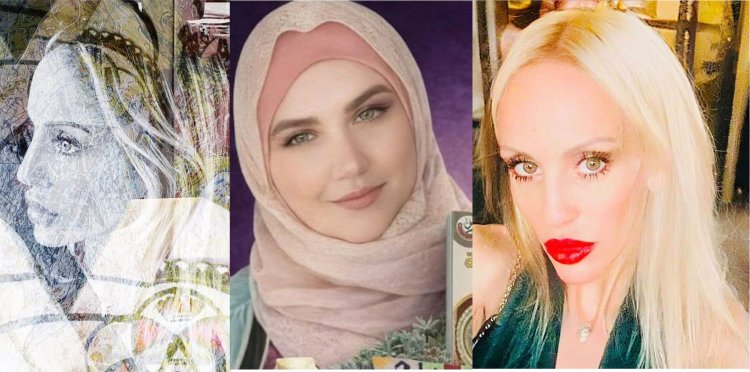
THE IRIS FLOWER OF YOUR HEART -IRIS CALIF - ISRAEL
My beloved
In the crown of the Iris heart flower of heaven,
I am dripping a golden- painted dawn into your eyes,
The prayer of the holy sun rain land, silenced her voice,
The hidden wind blows; the secrets of my wild moon dance
I remove the essence of the clothing of my Iris flower soul
in front of the halo river rock of your body.
I am the naked ballerina, The living Iris flower of heaven,
dancing your living Iris heart
My wet lips whispering to the purity of the human beauty darkness of the Night of the loving;
Breath
Tonight
I am dripping,
The Iris flower of Your hear
THE HUMAN DIVINE FLOWER: THE IRIS
God
In the living halo of heaven's candlesticks,
my blue-and-gold candle flame shines
As Iris, a human flower,
I kindle my heavenly dance within the celestial realm of the human moon
Amid the pure wilderness
of the desert's wild ashes
A Life
The days gather
the spirit-soul of the angel of my life,
creating
my human Iris flower heart,
to the Holy Land
upon the heavenly winds of the hidden Iris realm
CROWN OF LIFE
IRIS CALIF- ISRAEL
My body is carried through heavenly worlds, as my spirit kneels before the Wings of the land of death, the land of the living and the land of love
And I am the human flower Iris draping my tears on the stone of death in front of the Living Grace Mountain of my pure broken soul,
My soul breathing its breaths in my Piyyut mysteries prayer of my Iris soul that Dreams;
Life
Iris; flower of the universe world
A girl, a woman; kneeling to wings of life,
My body shines and breathes as the light of love and as the light of death’s breath
Anorexia;
The kingdom of life and death personification:
The kingdom of life within death, in its robe and its incarnation
You, the Anorexia;
My spiritual soul friend; my twin soul
Holding and breathing me with infinity; Death
My soul, for my escape from my destruction,
A wild sacred, devastating force,
Self-inflicted torment; surrender, my awe
My flogging,
My dismantling of my faith, my trust, my security, my purification
From instinct, of my own self, and from human inclination
My soul is endlessly fleeing its own destruction,
And yet held within it
My tear flows through the whispering voice of the heart’s halo wind
I ask and look at my soul, my grief, my fear, my destruction,
Yet yearning for strength, of feminine power, pure love and longing of a girl,
Woman for life within her, a healthy and sound body,
To close my green living eyes, with rain, thunder in the lightning moon,
And the sun of the worlds. My body breathes deeply in my weeping years
And in my weeping years, I am dreaming the crown of life
The living dancing vitality that grows and sinks in my body and soul, and me,
The human Iris flower of creation; a wild pure velvet flower standing healthy
Covering my spirit soul and my naked body in the
Crown of Life
LONGING FOR LIFE -IRIS CALIF
Me, a tiny girl forges in the puddles of heaven
Like a bird drowned in love, closing my eyes
I carry my heart to the silence that breaks
Through the world
He, the creator of the world’s King of the Angels of the World dwelling forever
Raising my soul from the wings of death
Collect the halo of my body
And in the stream of my longing,
My sadness is wrapped
And in Iris my prayer
I am dancing
Longing for life
THE DESERT BRIDE-IRIS CALIF
King of the angels of the world, Lord of land and heaven
In the calm prayer of your rains, Simulates virtue of love
In God's garment to my body, I predict the sun ballerina of my body
To the silence of the divine wind
The darkness carrying love
Desire raising my dream
And the summer candle is lit by a holy life
Reigns in the crown of winter writings of my soul
The evening creates my passion that gives birth to existence
The night breathes the golden halo of my dance in the sand of the fields of the world
And in the knowledge of heaven
I am the bride of the desert
THE DAUGHTER OF THE LIVING – IRIS CALIF
God creates the heavens
Of the spirit in the light of the world,
Springs with the authentic names of life.
You are my halo strength.
In my image, the moon;
Man’s salvation.
Behold, I am the Iris; the daughter of the Living,
Naked before the sands of the heavenly kingdom
Adorned with gold and drops of moonlight.
The sun in the clouds, and the rays wander.
My body is like the burning darkness of the Arch,
The heart of the night weaves, beats in the mountains to the grace of the Human Iris flower,
And at the gate of the earth, Gabriel.
The temple house of the dead
Was founded in me,
And the snowy days of silence of my breath-stilled soul
Kneel in the light of the prophets.
The golden dawn kissing my human blood,
And in the image of the soul of God,
Our Father in Heaven,
In the beginning of the wilderness.
Temple of the scriptures of the world,
In the voice of psalms, creator of the human.
Eve,
Daughter of love, Daughter of God,
A girl of life
ABOUT IRIS CALIF
Iris Calif – Israel
Iris Calif is a writer, poet, editor, poetry translator, and dancer whose work has gained broad international recognition. She is a member of the Hebrew Writers Association in Israel and ACUM. Her poetry combines spirituality, art, and culture, creating a poetic space that connects the human, the divine, nature, and creation. Her writing carries themes of holiness, spirituality, higher realms, and the hidden, while aspiring to illuminate the profound connection between the human soul, faith, and the Creator. Her artistic path connects the spiritual heritage of the Jewish voice with universal values of love, humanity, harmony, and peace, and is deeply rooted in an inner spiritual journey in which the Jewish voice, the soul, nature, and the divine come together through poetic expression. Her writing expresses a humanistic and universal voice that seeks to build bridges of peace, love, and dialogue among peoples, cultures, and languages.
Calif serves as an editor and poetry translator for the literary, cultural, and arts magazine Bekivun Haruach, where she is responsible for international relations and for editing international poetry anthologies. She also edits and translates world poetry for MOKASINI and for the “World Poetry” section of the literary website Hadarim. In addition, she serves as Head of the Israeli Liaison Department of CHINH Magazine of Arts and Literature (Hong Kong–China), is a member of the international SAPS association for artists and writers, and is a member of the editorial board of the English edition of the World Poetry Yearbook.
Alongside her original work, Iris Calif translates the works of international poets into Hebrew, thereby bringing poetic voices from diverse cultures to readers in Israel. Her poems and translations have been presented in art and literary exhibitions in Israel, including the exhibition “Butterflies of Peace,” presented in June 2024 at the Air Force House Gallery in Herzliya. Her work as a translator reflects her commitment to promoting international cultural dialogue, connecting languages, and creating a shared space of creativity and understanding among peoples and cultures.
Among the international awards and honors she has received:
The Grand Prize of Excellence, as part of the international award “Tra le parole e l'infinito” (Italy, 2026) – the only recipient from Israel.
A Special Prize for Excellence – City of Galateo – Antonio De Ferraris (Italy, 2024), for the poem “Angel of Life” (“Malach HaChaim”).
Best International Poet of 2023, awarded by IPTRC–CHINH (China).
The winning work representing Israel in the Friedrich Schiller International Literary Competition (Germany, 2025), for the poem “The Desert Bride” (“Kalat HaMidbar”).
The international literary award “The Greatest Poets of the World” (Greece–Mexico, 2026).
Iris Calif holds an Honorary Doctorate, awarded to her by the International Forum for Creativity, Humanity, and Coexistence in the Kingdom of Morocco. In 2024, she was selected as one of the 20 leading international journalists by Legacy Crown’s – Crown of Heritage (Asia). She has also received certificates of recognition from the Professional Writers’ Union of Russia and the international magazine Arina NN, in recognition of her contribution to world culture, the international poetry community, and friendship among peoples.
As further recognition of her literary achievements and international contribution, Iris Calif joined the international literary association Creative Tribune – Germany (ILACT) and was appointed Ambassador and Representative of ILACT in Israel. She is recognized as the first Israeli poet to receive this recognition. Her membership in the association and her appointment reflect the organization’s recognition of her literary talent, her creative work, and her contribution to the advancement of literature, culture, and international literary relations.
Iris Calif is a descendant of a lineage of Kabbalists, and this spiritual heritage is reflected in the mystical and Kabbalistic dimensions of her poetry. Her writing carries within it motifs of holiness, spirituality, higher realms, and the hidden, illuminating the profound connection between the human soul, faith, the divine, and creation.
Her poetry is deeply rooted in a personal spiritual journey in which the Jewish voice, the soul, nature, and the divine are interwoven through poetic expression. At the heart of her creative path stands her desire to illuminate the Jewish voice through love, life, and faith in the Creator, while at the same time opening her poetry to universal values of humanity, compassion, harmony, peace, and dialogue among peoples and cultures.
Her poems have been published and presented on radio and television, in literary journals, newspapers, anthologies, and numerous literary platforms in Israel and around the world. Her work has been translated into many languages, including Spanish, Italian, Chinese, Arabic, Russian, Bengali, Turkish, Nepali, Assamese, and Albanian. Articles and literary reviews of her work have been published by international literary critics and scholars, who have emphasized the uniqueness of her work and its artistic and spiritual depth.
To date, three of her books have been published: “Beshvil Kasum Noshevet Lolita” (2001), “Yareach Pra’i Tahor” (2017), and “Bat Elohim” (2020), and she is currently working on her fourth and fifth books.
Her work continues to represent a unique Israeli voice in the international sphere and to enrich poetry with dimensions of love, harmony, and humanity, while illuminating the human spirit, holiness, and the profound connection between the human being, God, and creation. Through her writing, translations, and cultural activities, she carries with her a dream of universal peace and an ongoing dialogue among peoples, cultures, and languages.
Facebook: Iris Calif
ABOUT TAGHRID BOU MERHI
Taghrid Bou Merhi – Lebanon / Brazil
Taghrid Bou Merhi is a Lebanese poet, writer, journalist, editor, literary critic, promoter of literature and culture, and translator living in Brazil. She holds a degree in Law and serves as an advisor to the International Union of Arab Intellectuals in the Media Authority for Translation Affairs, as well as an advisor to the Al-Sham Countries Literary Platform for Literary Translation. She also serves as an advisor to the International Federation of Arab Intellectuals in the Media Authority for Translation Affairs.
She is the Ambassador of Lebanon to the Fellowship of Creativity and International Science Humanities in London, England; Ambassador of the “International Cultural Salon Association”; Ambassador of Brazil to the American P.L.O.T.S. Magazine; and Ambassador of Lebanon to the Association of the World Union of Writers and Artists (UMEA), Portugal.
She is a member of the prestigious WWWU – World Nations Writers’ Union, Kazakhstan, and an editor for Al-Arabe Today, Rainbow, Literária Agharid, Al-Nil Walfurat, Literária, and Allaylak Magazine.
She is fluent in Arabic, her native language, as well as French, English, Portuguese, Italian, and Spanish.
She received the Nizar Sartawi International Translator Award for Creativity 2021 in the field of translation and literature. She received the 2nd Annual Zhengxin International Poet Award in 2022 and 2023, and was also honored with the prestigious “Rahim Karim World Prize.”
She received recognition from Delphi, Greece (Elaiko Bpabeio), in connection with the celebration of peace.
Her poems have been published in numerous international anthologies, literary magazines, journals, and websites, and have been translated into more than 36 languages. As of May 30, 2023, she had translated 14 books. She is the author of 15 books.
Facebook: Taghrid BouMerhi