

The Sense of Homeland in the Poetry of Jumaniyoz Jabborov
 Moderator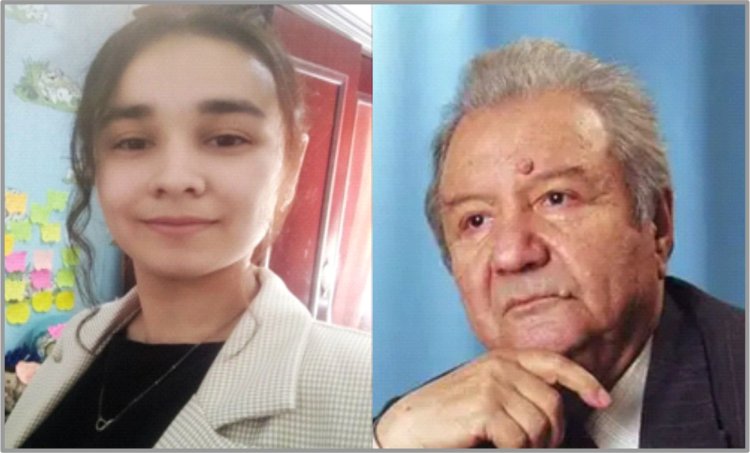
“Vatanimni kuylayman”: A Poetry Collection: The Sense of Homeland in the Poetry of Jumaniyoz Jabborov
Sometimes a book’s title seems to speak for its entire contents. These one or two sentences are not merely the title of a book; they are like a cry from the heart, and if these words are written from the heart, they can reach other hearts as well. Those two sentences seem to speak of an entire history, of all existence. It would not be an exaggeration to say that “Vatanimni kuylayman” (“I Sing My Homeland”) is one of those books. The moment we read that title, images of the motherland, the streets of childhood, the motherland’s soil, the people, and the landscapes of the place where we were born and raised begin to unfold before our eyes. Behind this title stands the poet Jumaniyoz Jabborov, who holds a special place in Uzbek poetry.
Jumaniyoz Jabborov was born in 1930 in the village of Po‘loti in the Koson district of the Qashqadaryo region. Qashqadaryo is considered an oasis distinguished by its ancient history and unique nature. Perhaps that is why in the poet’s work the concepts of motherland, people’s life, labor, and homeland are mentioned with special affection.
“Vatanimni kuylayman” (“I Sing My Homeland”) is a title that comes from the heart. The poet’s first collection of poems was published in 1953 under the title “Vatanimni kuylayman” (“I Sing My Homeland”). If we pay attention to the word “sing” in the book’s title, we can see that the poet did not say “I will write about my homeland,” but rather “Vatanimni kuylayman” (“I Sing My Homeland”). There is a significant difference between these two expressions.
Writing is putting thoughts on paper, while singing means bringing the feelings in the heart out into sound. For a poet, the homeland is not just a simple subject but a feeling that comes from the heart. Writing a poem about the homeland may seem easy. However, to convey it to the reader's heart, the poet himself must deeply feel that emotion. One of the most valued aspects of Jumaniyoz Jabborov’s poetry is precisely this—the concept of the homeland is imagined alongside human experiences.
Homeland is not just a place on a map. For some, it is the village where they were born; for others, it is their parents’ home; and for still others, it is childhood memories, their mother tongue, or their people's history. In fact, all of these together constitute the concept of homeland.
A similar broad interpretation of the concept of Motherland can be found in the work of Jumaniyoz Jabborov. For the poet, the motherland and its people are inseparable. Both the beauty and the future of the country are inextricably linked to the people who live there.
Therefore, in his poetry, the life, labor, dreams, and experiences of the ordinary person also hold great significance.
A creative journey that began in Qashqadaryo. In every artist's heart, their native land leaves a special mark. It is also difficult to imagine Jumaniyoz Jabborov’s creative world apart from Qashqadaryo. The expanses of Koson, village life, and images tied to the motherland played a distinctive role in shaping the poet’s worldview.
It is interesting to think about a poet who was born in a remote village of Qashqadaryo and went on to step into the wider literary world.
The boy who was once born in the village of Po‘loti later became a creator who left his mark on Uzbek literature. His books reached readers of various generations.
The poet’s song about the homeland is needed even today. Time passes. Generations change. Lifestyles change. But the need for a person's love for their homeland never disappears.
It begins with simple, yet profound, values like speaking one’s native language freely, receiving a good education, loving one’s profession, valuing one’s parents, being a useful person to one’s people, and preserving the land of one’s birth.
From this perspective, the title “Vatanimni kuylayman” (“I Sing My Homeland”) is not unfamiliar to the modern reader.
Because singing about the homeland is not just a poet’s duty. Every person can demonstrate their love for their homeland through their work, knowledge, and good deeds.
A great journey that began with a book. Although “Vatanimni kuylayman” (“I Sing My Homeland”) is Jumaniyoz Jabborov’s first poetry collection, his creative journey did not end there. In the years that followed, the poet’s “Bahor nafasi” (“Breath of spring”), “Maqsad yo‘lida” (“On the path to the goal”), “Tog‘lar sadosi” (“Echo of the mountains”), “Ona yer qo‘shig‘i” (“Mother Earth’s Song”), “Subhidam xayollari” (“My morning dreams”), “E’tiqod” (“Belief”), such as poetic books have been published.
The very titles reveal the diverse facets of the poet’s creativity: spring, mountain, motherland, faith, the human heart...
Thus, the sentiments expressed in “Vatanimni kuylayman” (“I Sing My Homeland”) continued in various forms in his subsequent work.
What does a person find when they read a book? When we read Jumaniyoz Jabborov’s poems, we find not only the poet’s thoughts but also some of our own feelings. A childhood scene, our native village, our parents’ words, the nature of our homeland, or simply a familiar street all of these can awaken memories of the homeland in a person’s heart. This is the power of good literature. It doesn’t just educate the reader, but also encourages them to reflect on their own lives.
Reading Jumaniyoz Jabborov’s works on the theme of the Motherland evokes this very impression.
Today, another legacy worth reading. The value of a literary heritage is not measured solely by the era in which it was created. If a work can still make a person think years later, then it becomes a spiritual treasure passed down from generation to generation.
Jumaniyoz Jabborov’s creative legacy is also one such treasure worth studying. In particular, revisiting his first collection, “Vatanimni kuylayman” (“I Sing My Homeland”) helps us understand where the poet’s creative journey began.
Today, as we remember the name of the poet born in Koson, we can appreciate his work not just as a part of the past literature, but also as a spiritual legacy that helps the younger generation reflect on the motherland, the motherland, humanity, and goodness.
After all, poems written about the homeland do not grow old over time. Because the homeland is a feeling that lives in the human heart. Jumaniyoz Jabborov is one of the creators who has turned this very feeling into poetry. “Vatanimni kuylayman” (“I Sing My Homeland”) may be one of the poet’s first books, but the sentiment in it’s title resonates anew for every generation.
Saidqulova Nozima To‘lqin daughter
Karshi State Technical University
Irrigation engineering faculty of master
Uzbekistan